A Tale Of Two Chardonnays: France vs California
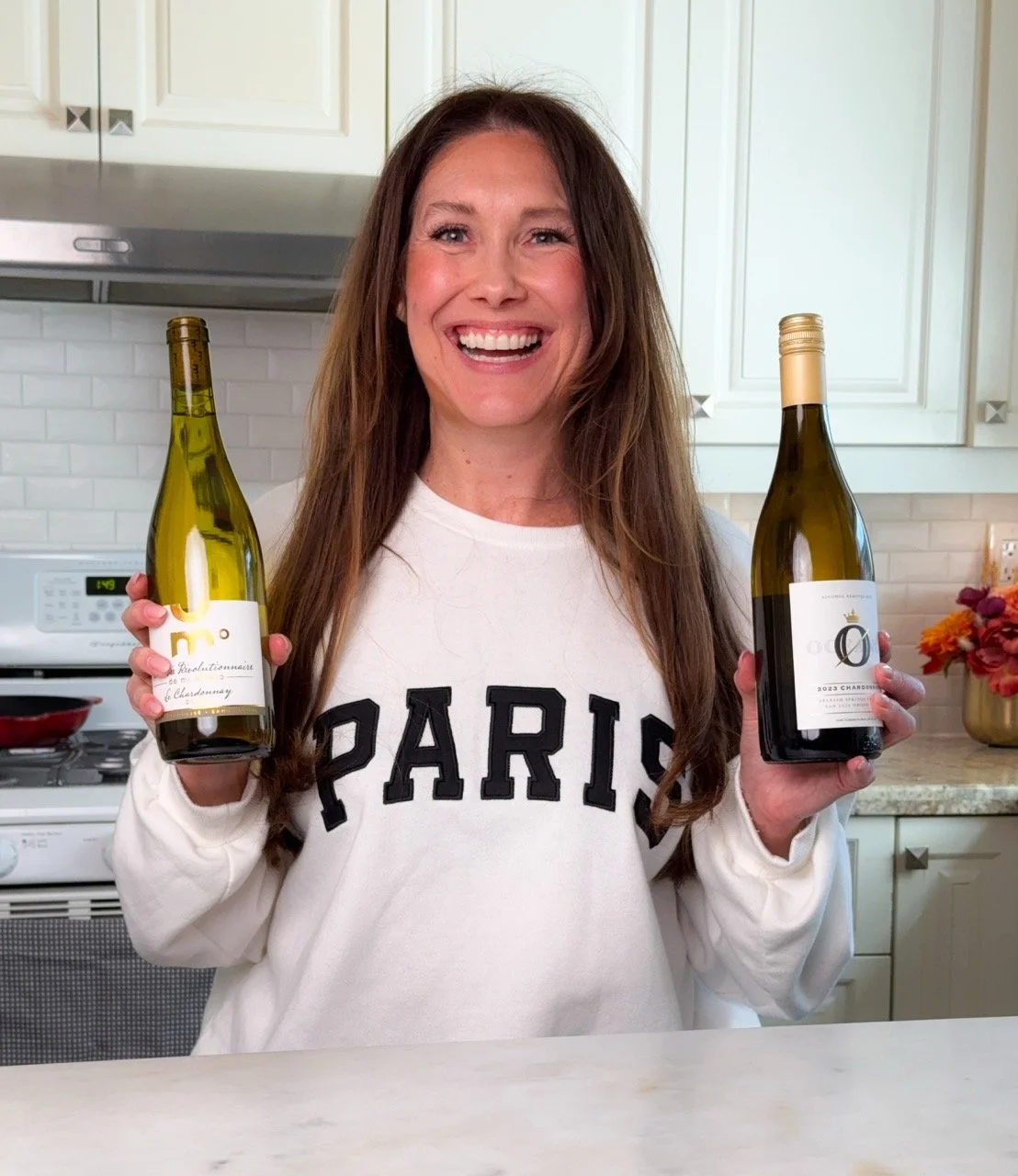
/This is a tale of two non-alcoholic chardonnays going head-to-head on my dining room table - a classic French-style chardonnay from the south west of France, and a typical California-style chardonnay. Let’s compare!
I love chardonnay. It was the wine I always defaulted to when I wanted something comforting and familiar. In the non-alcoholic category, chardonnay is starting to become more closely aligned with the aspects of well-made wine and are being produced in more places.
U.S. wineries and brands have embraced non-alcoholic wine but there aren’t that many chardonnay style options. It’s taken many years for the French to embrace the value of non-alcoholic options, but as is typical of them, when they do something they do it well. I thought it would be interesting to compare styles, techniques for dealcoholization and the final tasting notes.
To set the baseline, what I’m looking for in a non-alcoholic chardonnay in order for it to be great are the following aspects:
minerality & acidity
some oakiness or buttery notes (depending on terroir)
juicy without tasting like juice (balanced well with acidity)
enough structure to hold up
medium or medium-minus body
bonus: less than 3g of sugar per glass
There aren’t that many non-alcoholic wines in the category that are excellent at all of the above, especially chardonnay. My main favourite up until this point has been the Leitz Chardonnay - a fantastic cuvee that just hits all the right notes for me. When I drank regular wine, I was partial to what’s called Cool Climate Chardonnay - France, Niagara Region, Oregon, Washington and Burgundy. But I’ve never said no to a good fat Russian River chard (California).
So, there is a shocking and surprising twist in this toe-to-toe match up of opposing terroirs, pitting Moderato 2023 Cuvee Revolutionnaire Chardonnay from the Cote de Gascogne, France against Oceano Zero 2023 Chardonnay from California **NOTE: this is the first vintage of Oceano Zero - they’ve since released an incredible 2024 version. Read the review here. So…on y va! (let’s go in French!).
Oceano Zero 2023 Chardonnay v. Moderato Le Cuvee Revolutionnaire 2023 Chardonnay
Setting the scene
A few weeks ago, I wrote about French brand Moderato and how they are working towards a reinvention of the French wine tradition without the alcohol (I’m particularly fond of their slogan “Liberté, Egalité, Sobriété” ❤️). The chardonnay is produced in Côtes de Gascogne in the south west of France.
Oceano Zero, in comparison, hails from the sunny hills of California’s Spanish Springs Vineyard. They make limited edition single-vineyard vintages, and have really tried to encapsulate what I call ‘California modern comfort’ but what they call luxury winemaking without the alcohol. It’s also a female founded company which I always love to support.
An ocean of difference
Both wines are made from 100% chardonnay in their own eco-systems (legacy owned vineyards and winemaking rather than farming out), but the key difference is in the terroir of the regions.
Chardonnay grapes from California’s Central Coast have a long growing season, tempered by Pacific breezes and morning fog, allowing grapes to ripen slowly while retaining balanced acidity. This produces a fuller-bodied expression of Chardonnay that appeals to those who enjoy more opulent wines.
By contrast, Chardonnay grapes from the Côtes de Gascogne region of southwest France reflect a cooler, more temperate climate and the limestone-rich soils of the area. These conditions yield lighter-bodied more elegant wines with crisp acidity and bright citrus notes. Gascogne chardonnay typically sees little to no oak, allowing its mineral structure to shine.
So perhaps we’re comparing apples to oranges?
Dealcoholization method
Oceano has the benefit of being able to use the BevZero spinning cone in California, whereas Moderato uses low-temperature vacuum distillation. Both methods have their benefits, but in my experience the spinning cone allows for better preservation of aromas. We shall see!
Aroma
I love the wet stone smell of the Moderato, because it smells like a young, green wine rather than just burnt juice. Not much fruit on the nose but a hint of butter and possibly some oak.
The Oceano on the other hand has aromas of butter, lemon and possibly an aromatic like jasmine. It definitely reflects the style of a warm climate California chardonnay.
Taste
Oceano Zero Chardonnay has a rich, almost buttery flavour with a salinity that really sticks - and when I say buttery, it’s not hit you over the head buttery like Fre Chardonnay. It’s also not as acidic as the usual non-alcoholic chardonnays, which often heavily favour green apple and lemon notes to drive the brightness. It’s actually quite mellow with a hint of tangerine and gentle white orchard fruit rounding out the buttery notes. Not a hint of oak. I do know the winemaker has admitted to adding in orange blossom aroma after dealcoholization to regain some complexity, but I actually didn’t detect any orange notes (whether you agree with this practice or not, it’s just not there). It’s actually a fantastic dupe of a lighter style California white.
The Moderato Cuvee Revolutionnaire Chardonnay is definitely a French wine. It’s so soft and buttery, with white fruit, a nice pop of bright citrus and light oak notes. It does taste more like a warm climate wine than expected of the Côtes de Gascogne, and it’s missing the minerality of a French chardonnay. But regardless, this wine will have you coming back for seconds and thirds. It’s light and refreshing, and the only downside is I wished it had slightly more acidity to finesse the softness.
Mouthfeel
The Oceano was a little thinner than I expected but honestly, not something that detracts from the wine. It’s actually quite pleasant, because often n/a wines trying to mimic California favourites are cloyingly thick from added juice and it doesn’t balance out with enough acidity or structure. The reason it’s a thinner liquid is due to the very very low amount of sugar per glass. Clocking in at 1g of sugar, I think this is one of the best examples of an n/a white staying at nearly no sugar, while maintaining some structure and body.
Moderato is a little more weighty and juicy, with a silky feel. It does fall apart a little at the end, but I felt like it was just perfect actually. A nice experience all around!
Food pairing
Moderato is meant to be paired with food, and my first foray into this wine was pairing it with broiled lemon salmon, new herbed potatoes and oven roasted rainbow carrots. It was a great pairing and the soft acidity of the chardonnay was an excellent accompaniment to the fatty salmon and dry roasted starches.
For me, California chardonnay was always my go-to ‘chips and chard’ wine and so I couldn’t resist trying that out, but to be a fair and equal test I would need to pair the Oceano with salmon and vegetables too. Its profile would be great with fish but I think it could really sing with sweet and savoury dishes like herbed apple pork tenderloin or stuffed chicken. I’ll keep you posted next time I have a bottle open!
Results
It was actually extremely difficult to taste these two wines side by side. They are so completely different and unique that I had to go back two times throughout the day and finally reassessed them on their own to finalize my thoughts. That’s a me problem, not a you problem!
I was SHOCKED to admit, as the experiment went on, to find out that I liked the Oceano Zero slightly more than the Moderato which was a huge surprise. I really enjoyed my first bottle of the Moderato a few weeks ago, and paired it with salmon one night and popcorn the second night and I couldn’t get enough. So it’s still a really good wine, but up against this California chard, it was definitely lighter and less structured.
That being said, both of these wines are heads above the bargain basement chardonnays from the grocery store. Either chardonnay is a good pick and remember the rule: chill that chardonnay until your teeth chatter! :)
Score for Oceano: 96 points
Score for Moderato: 93 points
How I rank wines (based on IWSC standards):
95 to 100 - An excellent drink with a great personality. An example that stands out among its peers
90 to 94 - An accomplished drink with considerable personality, character and complexity. A classic example of its style or variety.
85 to 89 - A perfectly well-made drink which provides an enjoyable drinking experience.
80 to 84 - An acceptable but simple drink, lacking distinction.